Skip to content
WR

A slower, classier corner of the internet

Fitness, food, and tiny habits for people who work long hours.

Eight topics, one honest voice. No accounts, no ads, no tracking. Just short, well-researched answers, ordered as a read-through you can actually follow.

25 chapters8 topicsNo accounts, no tracking
WorkRegimen: fitness, food, and tiny habits for people who work long hours

Fitness

Move more, even at a desk.

More
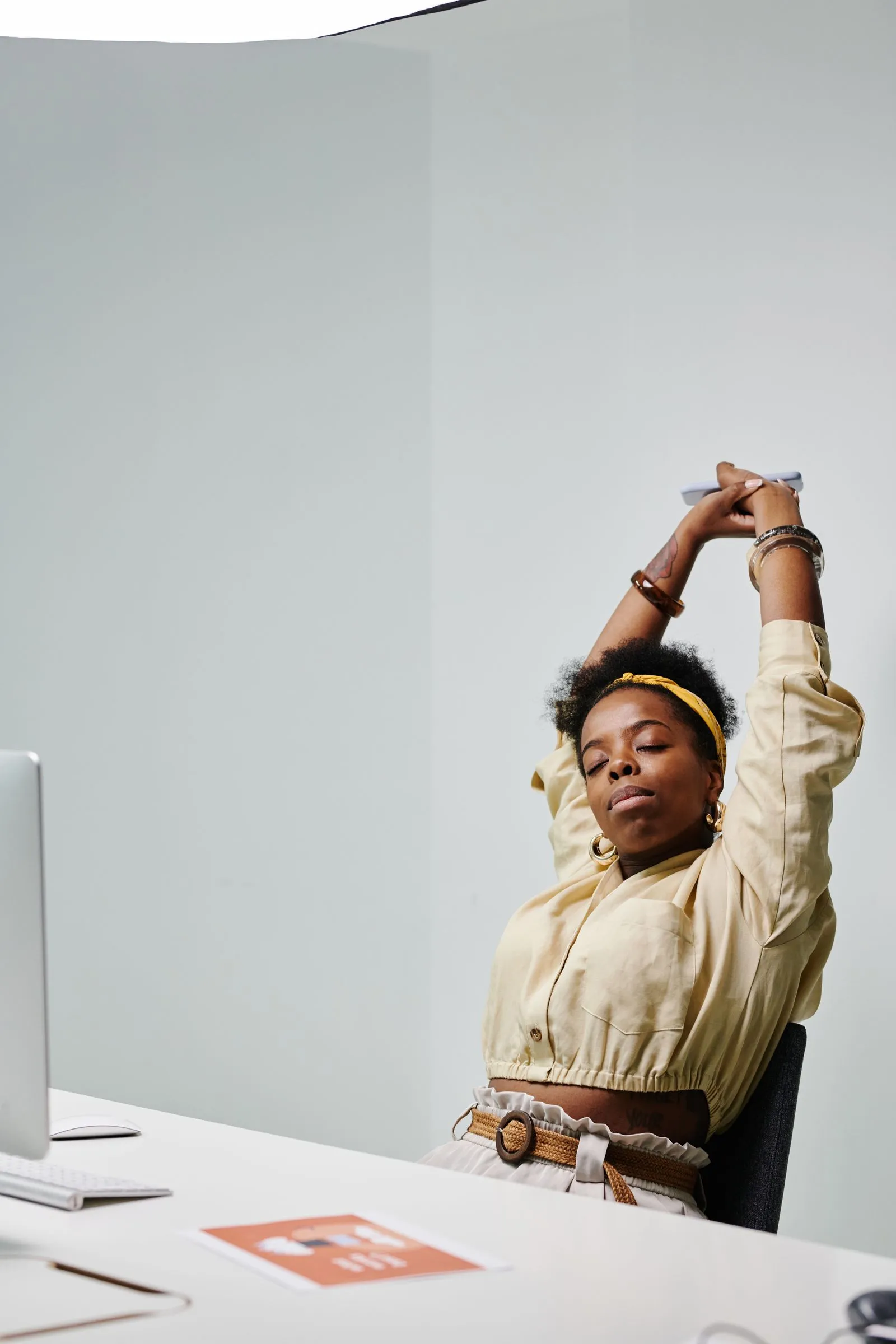
A person standing up from a desk chair to stretchFitness

What can I do every time I stand up from my desk?

Every time you stand, do a 20-second reset: five hip openers, five slow calf raises, and one overhead reach. It reverses the three things sitting tightens most, which are your hips, your calves, and a rounded upper back, before they have a chance to stiffen.

11 min read
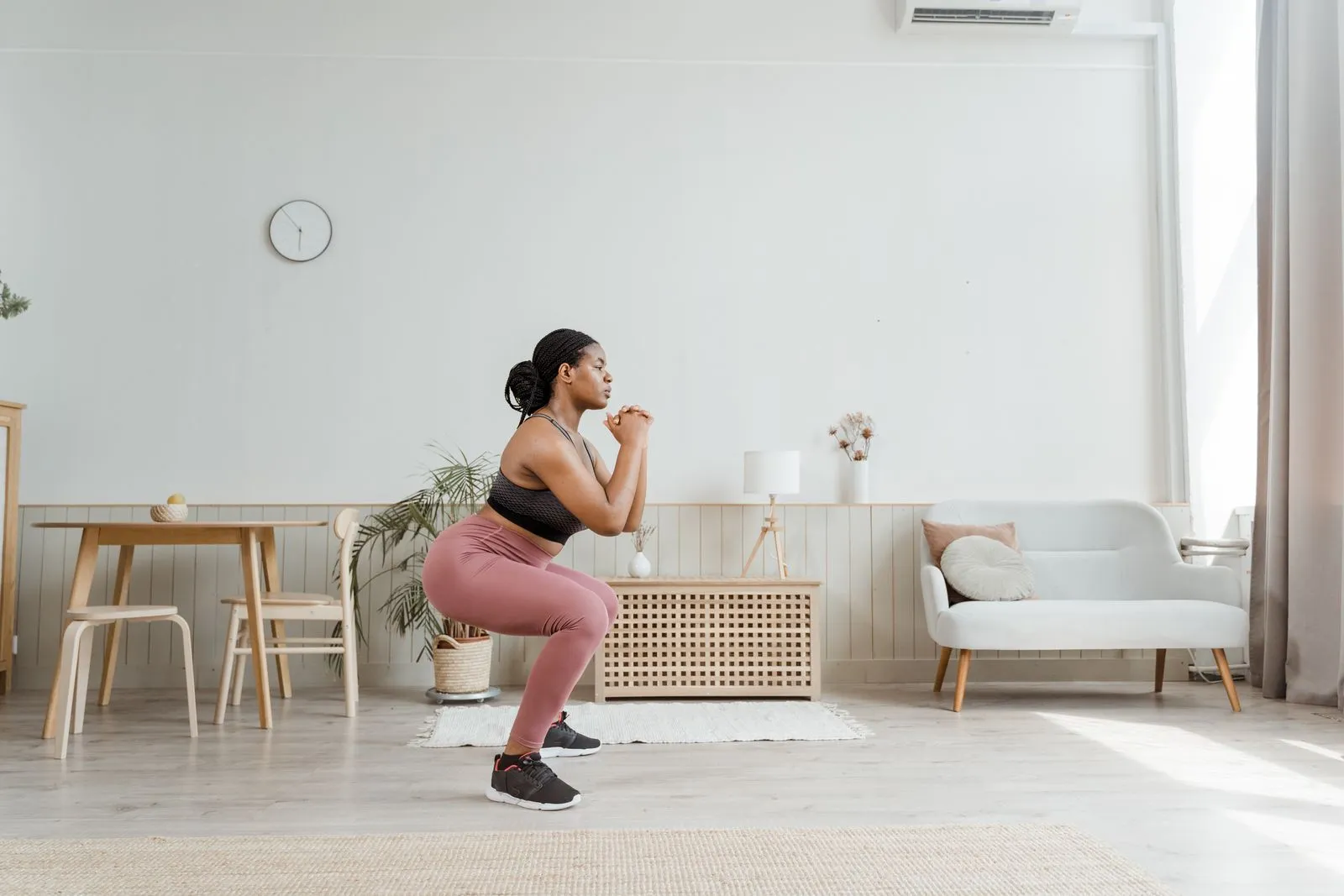
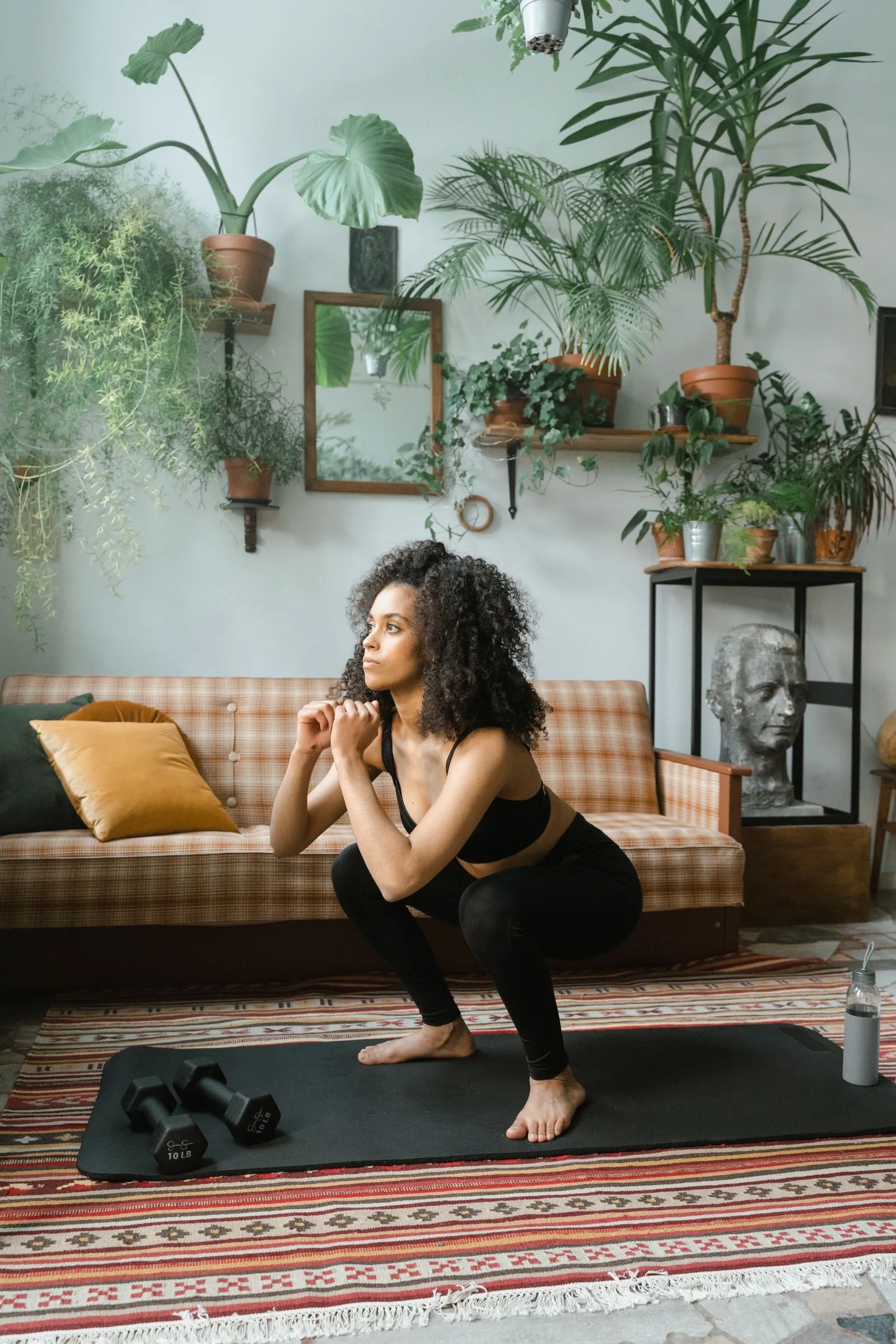
A person doing a bodyweight squat during a short home workoutFitness

What's a good 10-minute workout for someone who sits all day?

Run one circuit of five moves that cover the patterns sitting takes away: 10 squats, 10 glute bridges, 10 wall push-ups, a 20-second plank, and 10 band rows. Repeat twice with short rests. It takes ten minutes, needs no gym, and trains every major pattern your chair has switched off.

11 min read
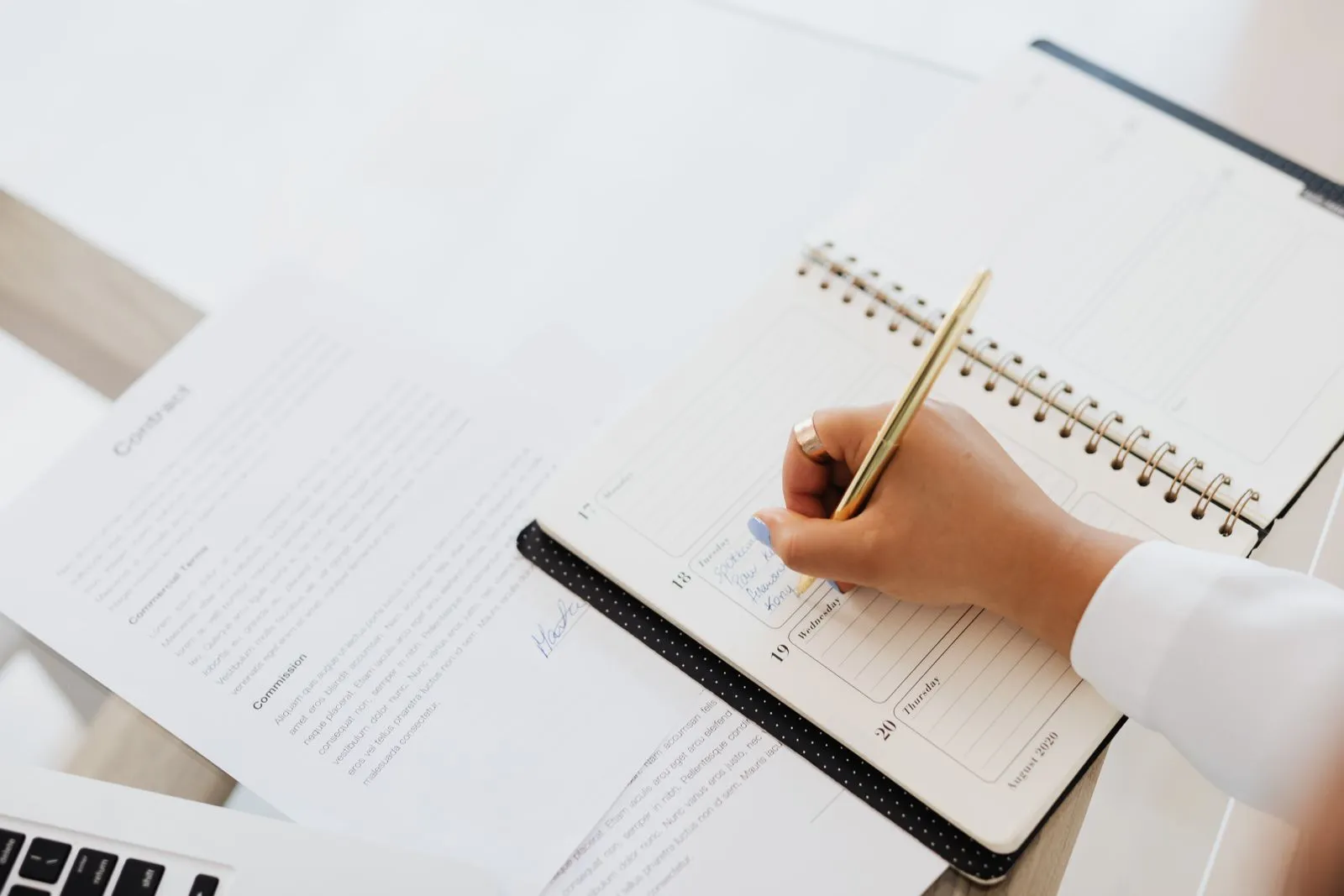
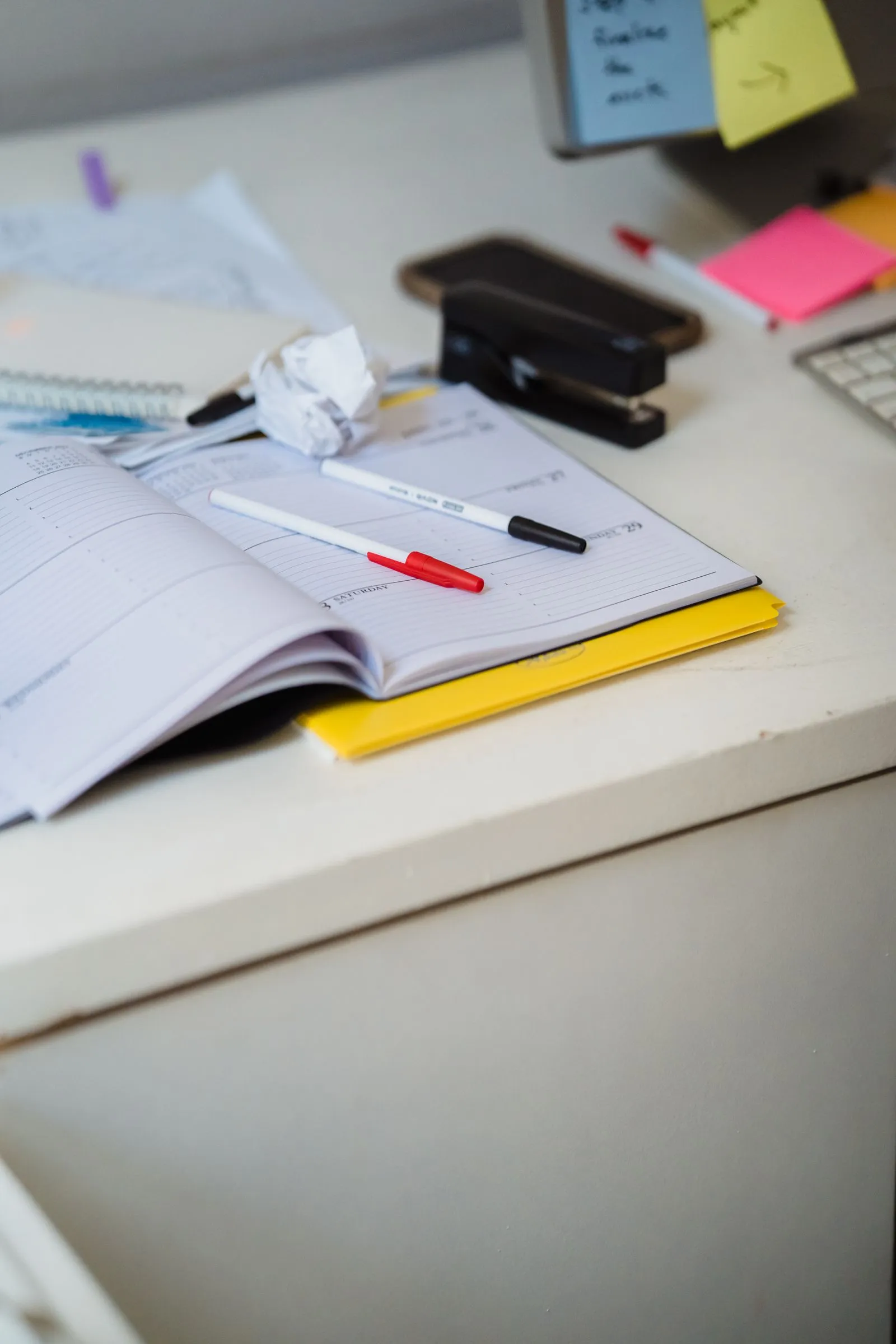
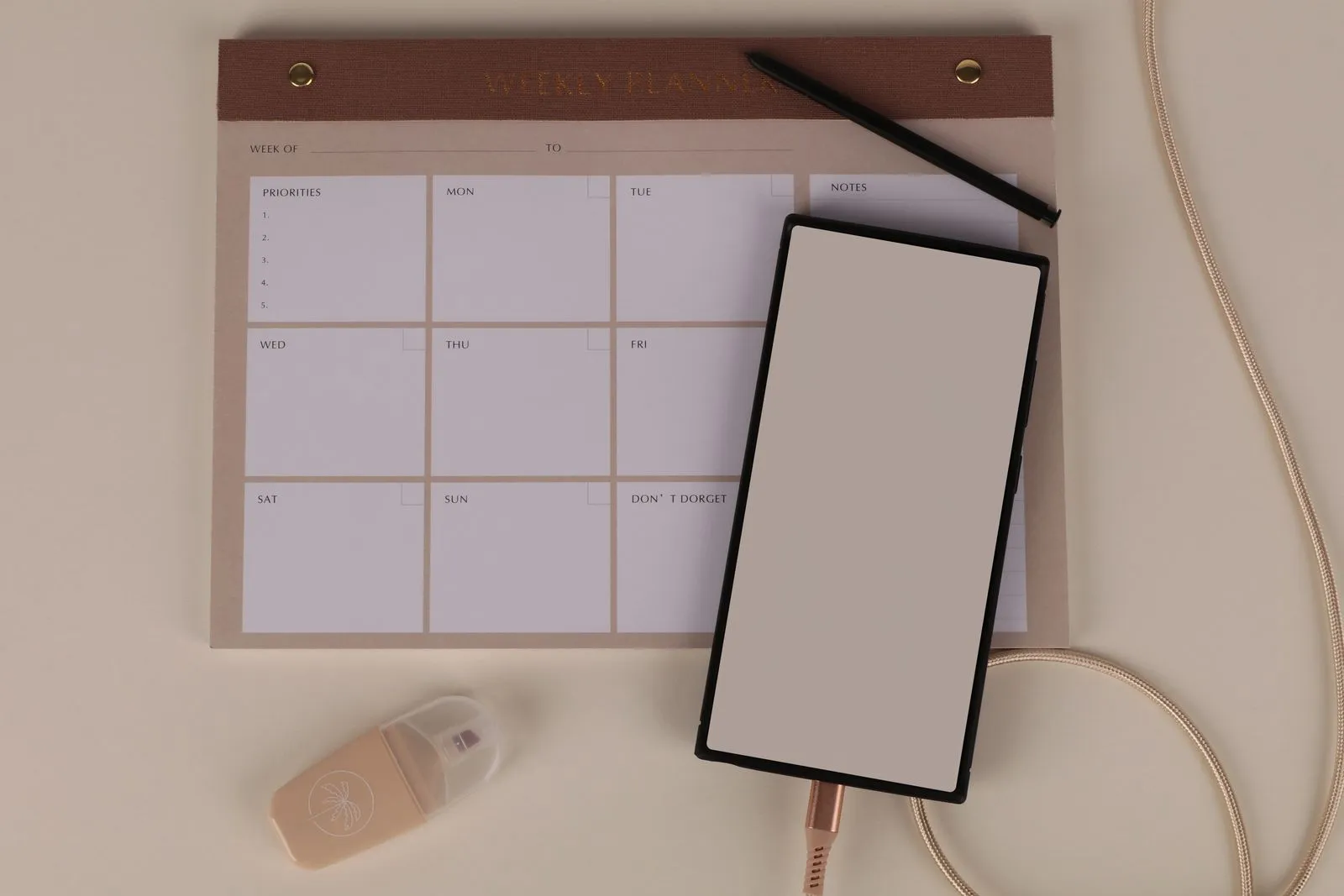
A person checking a calendar while planning a daily habitFitness

How do I stay consistent with movement when work gets busy?

Shrink the habit until it survives your worst week, then attach it to something that already happens at the same place and time. Consistency is not a willpower problem. It is a design problem, and the fix is a version so small that a bad Tuesday cannot break it.

11 min read

Workout

Structured training for people who sit all day.

More
A person walking outdoors at the start of a new exercise habitWorkout

I haven't exercised in years. How do I start?

Start with a ten-minute walk and one set of five bodyweight squats, three days this week. That is the whole plan. The first month is not about getting fit, it is about proving to yourself that the sessions happen, because the people who fail at week six almost always started at week one with too much.

10 min read
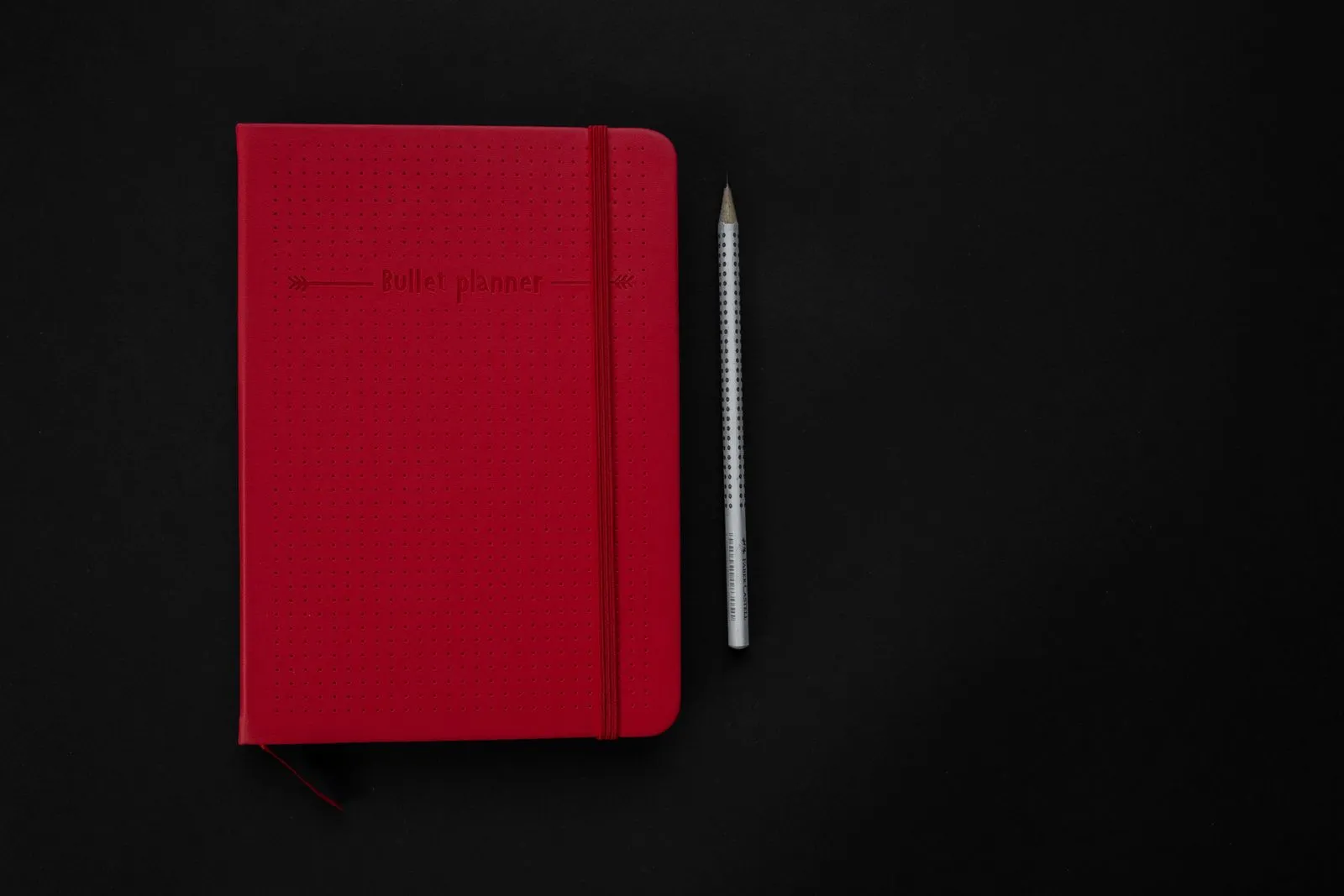
A person planning a workout schedule in a notebookWorkout

What's the best workout split for a busy desk worker?

Three full-body sessions a week, on non-consecutive days. Not a five-day body-part split. Full body hits every muscle two to three times a week, which the research favours, and it means a missed session costs you a fraction of a week rather than an entire muscle group.

10 min read
Dumbbells laid out for a full-body strength session at homeWorkout

What's a good full-body routine for 3 days a week?

Five patterns per session: squat, hinge, push, pull, and a carry or core hold. Two to three sets each, eight to twelve repetitions, finishing every set with about two good reps left. Rest two to three minutes between hard sets. Same session all three days, and progress by adding a rep before you add weight.

10 min read

Posture & Work Techniques

Fix your body at work.

More
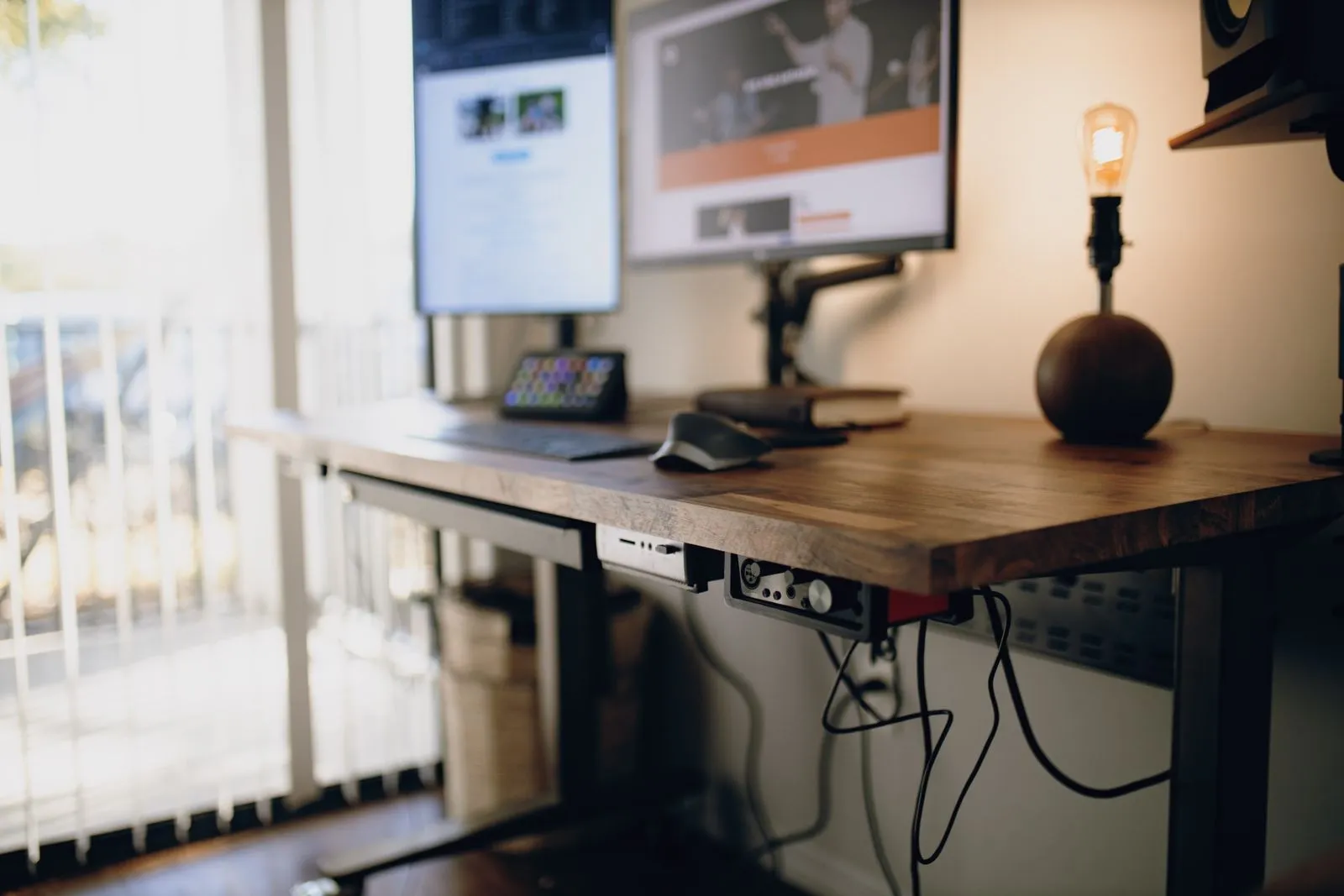
A desk arranged with the screen raised to eye level and the keyboard pulled closePosture & Work Techniques

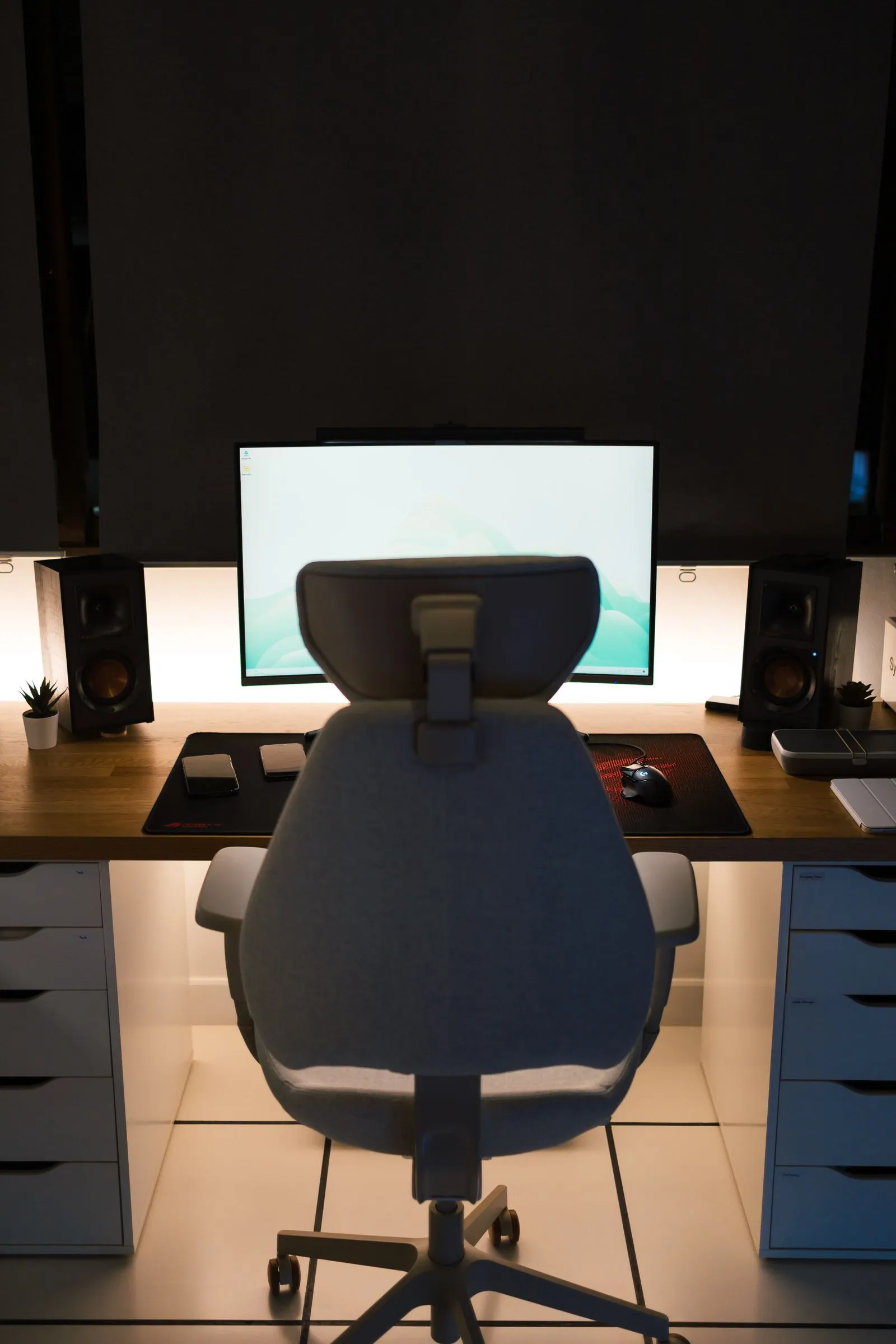
How do I set up my desk to protect my back?

Set it up from the body outward: feet flat, hips slightly above knees, lower back supported, elbows near your sides, screen top at eye level about an arm away. Then design for change, because the research is clear that no single position protects a back. The setup that helps is the one you can move around in.

12 min read
A person sitting comfortably and supported at a desk, leaning back slightlyPosture & Work Techniques

What does good sitting posture look like?

Good sitting posture is a range, not a position. Feet supported, weight through your sit bones, lower back supported when you lean back, screen where your eyes fall naturally. Then change it every twenty to thirty minutes. Researchers who study this have found no single posture that protects a back, so comfort and variety are the targets.

11 min read
A person doing a resistance-band row to strengthen the upper backPosture & Work Techniques

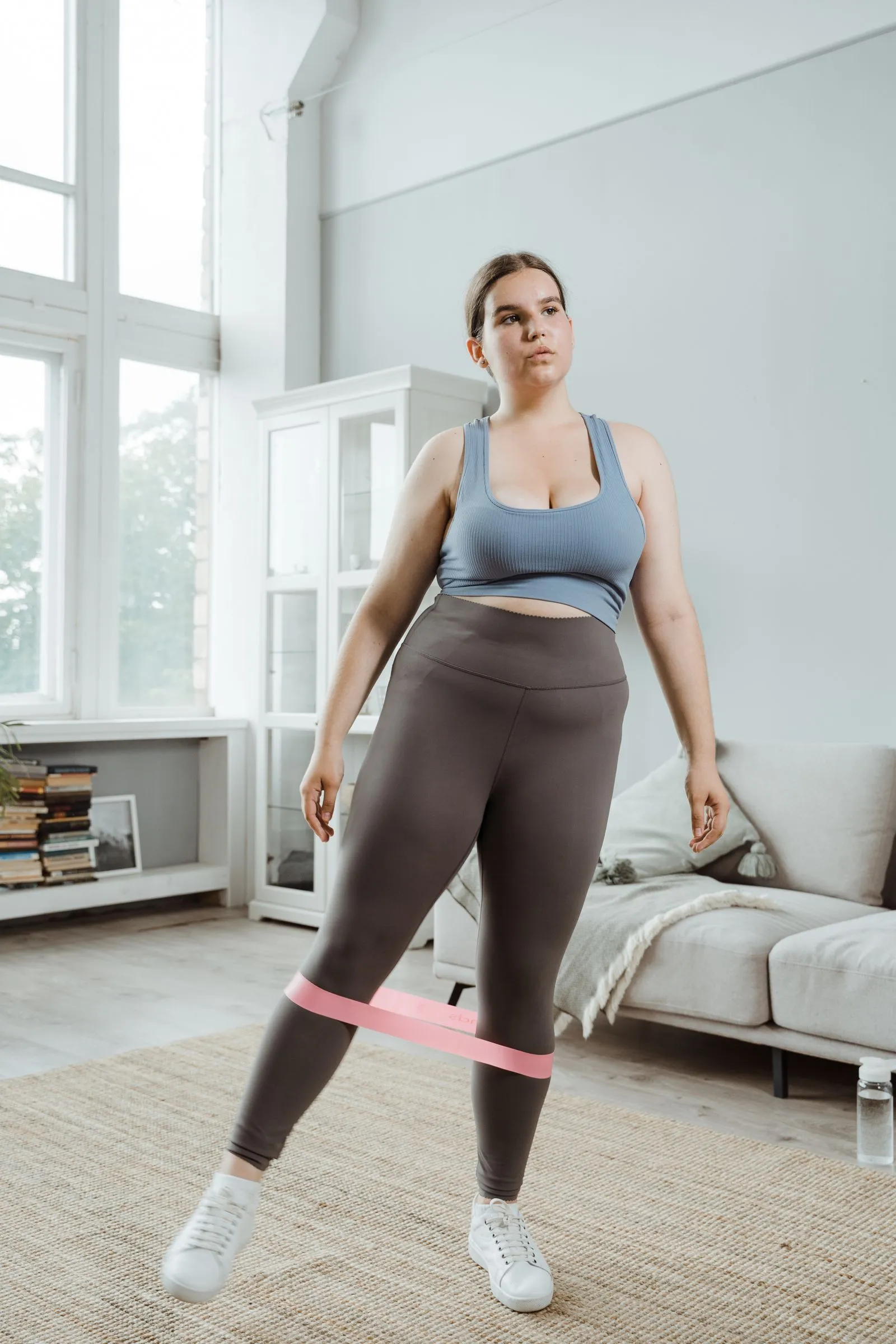
How do I fix rounded shoulders from computer work?

Train the upper back rather than stretching the chest and hoping. A Danish trial found two minutes a day of resistance-band lateral raises, five days a week, produced clinically meaningful drops in neck and shoulder pain over ten weeks. Add a doorway chest stretch, raise your screen to eye level, and give it eight weeks.

12 min read

Healthy Food

Eat well without needing more discipline.

More
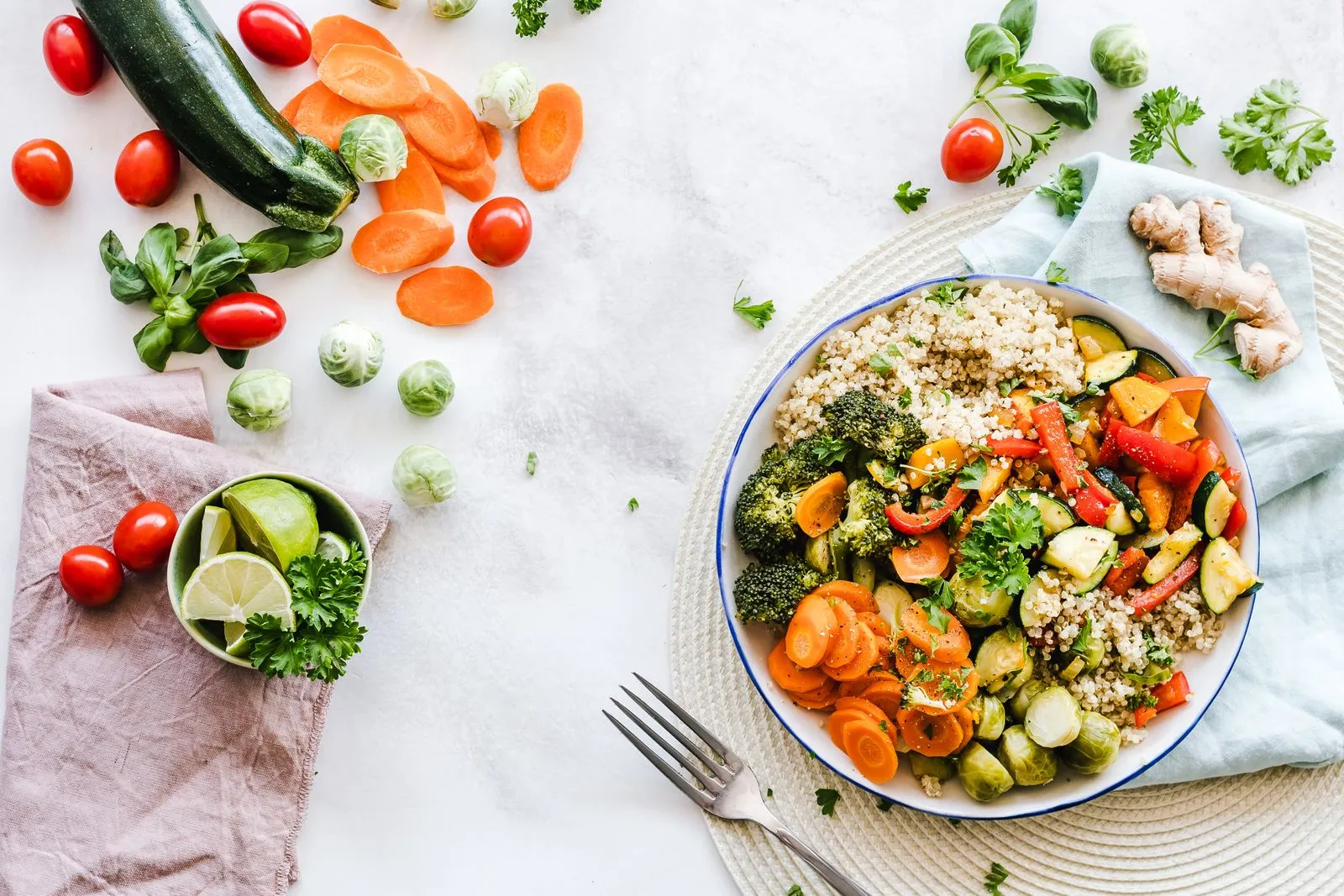
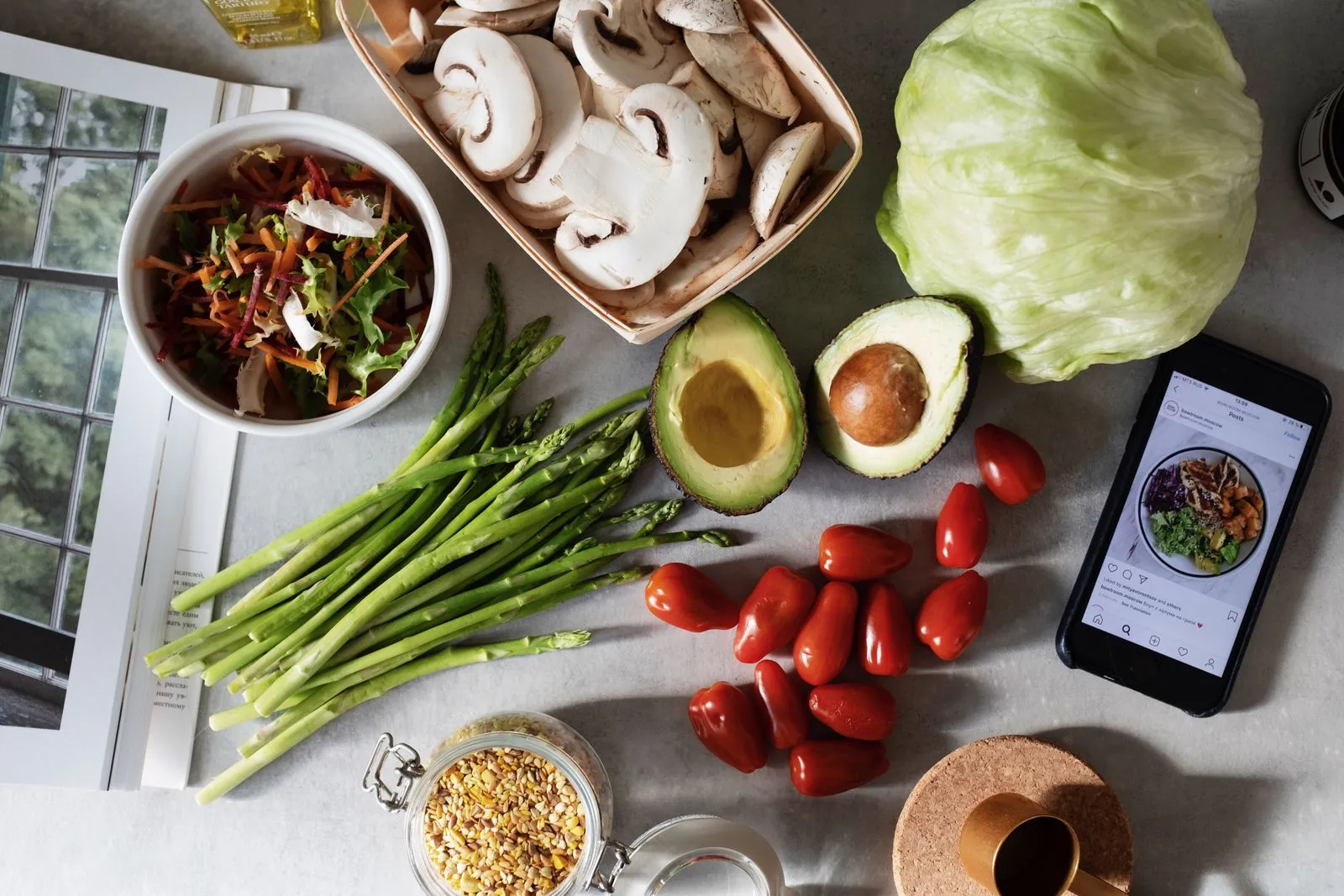
An assembled bowl of grains, beans and vegetables made without cookingHealthy Food

How do I eat healthy when I have no time to cook?

Stop cooking and start assembling. Keep six things in the house that need no preparation: tinned beans or pulses, frozen vegetables, pre-cooked grains, eggs or tinned fish, nuts, and something sharp like yoghurt or lemon. A real meal is then four minutes of combining, not forty of cooking.

10 min read
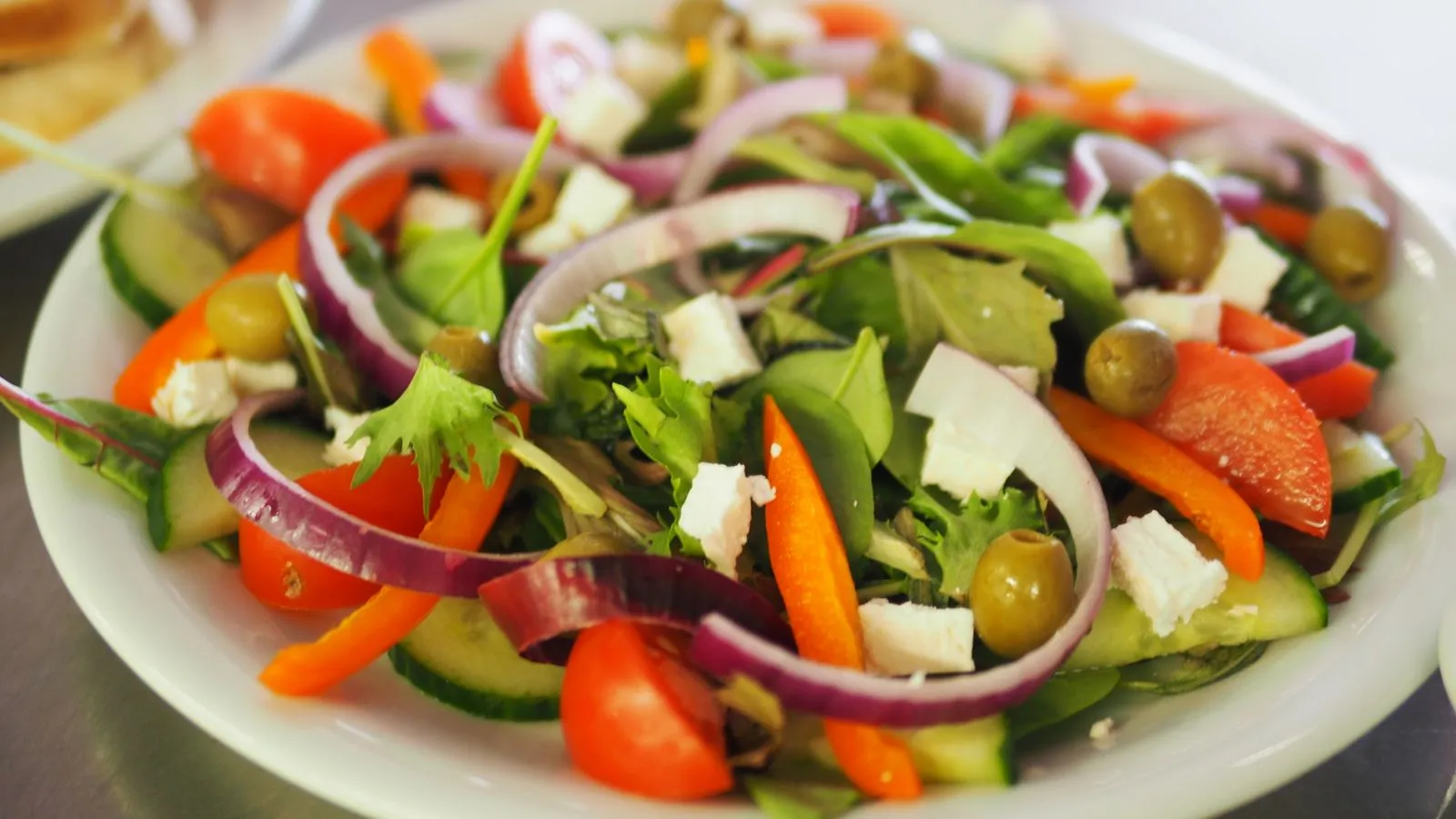
A plate divided into vegetables, protein and wholegrainsHealthy Food

What is a simple rule for building a balanced lunch?

Half the plate vegetables, a quarter protein, a quarter wholegrain carbohydrate, plus a little fat. It is the same shape Harvard and the NHS both arrived at, it needs no counting, and it is checkable in one glance. Get it roughly right most days and the details take care of themselves.

11 min read
A glass of water on a desk in place of a sugary soft drinkHealthy Food

What tiny food swaps make the biggest difference?

Four, in order of size: sugary drink to water or unsweetened tea, refined grain to wholegrain, crisps to nuts, and dessert to yoghurt with fruit. A 120,000-person Harvard study tracked exactly these foods over twenty years and found each shifted long-term weight in a measurable direction. None of them requires a recipe.

11 min read

Veg Food

Plant-forward meals that fill you up properly.

More
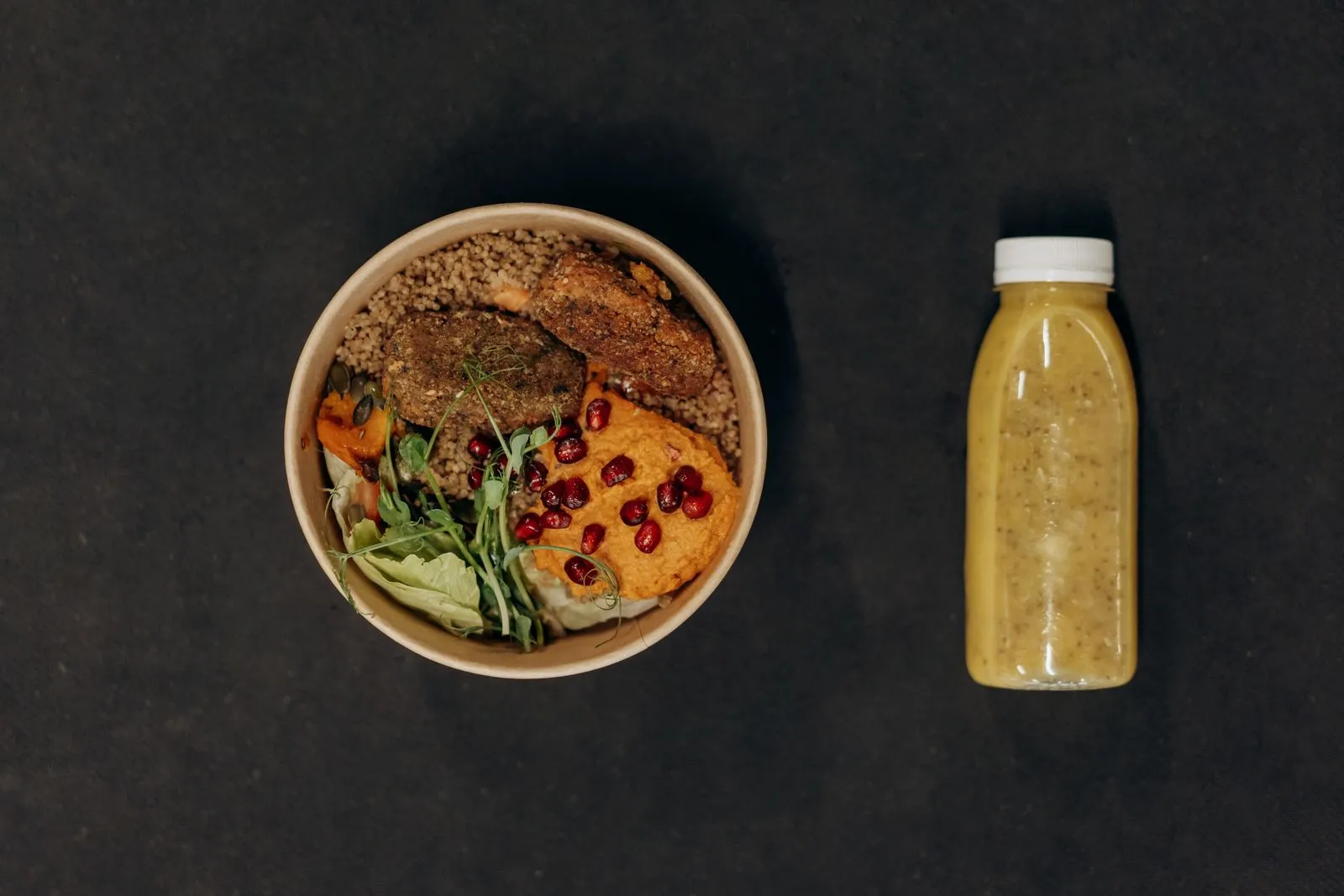
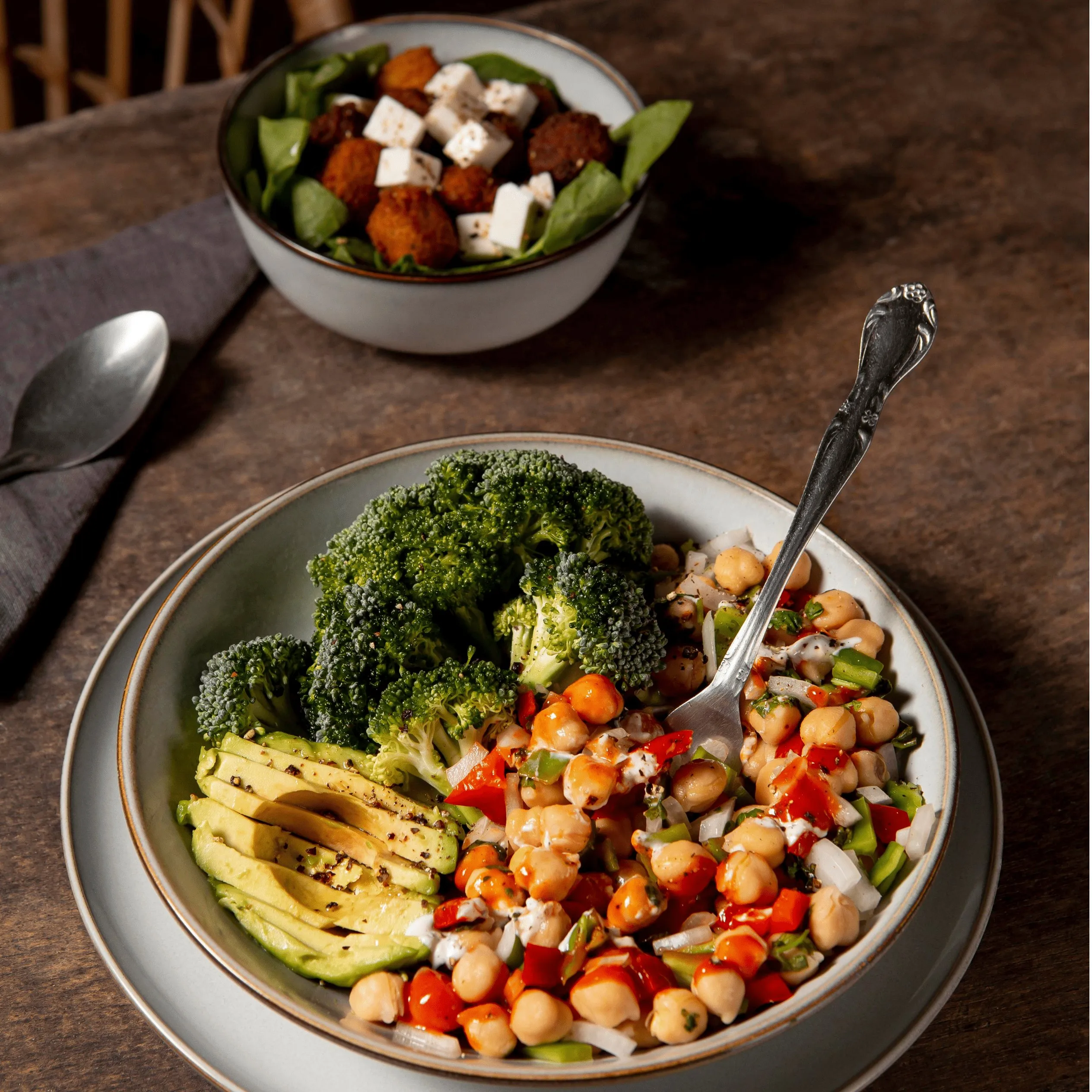
A vegetarian lunch bowl of lentils, grains and vegetablesVeg Food

How do I make a vegetarian lunch that keeps me full?

Build it around a pulse. A meta-analysis of feeding trials found people reported about 31 percent greater fullness after a serving of pulses compared with a control meal. Add a wholegrain, a spoon of fat and a large volume of vegetables, and the lunch holds until dinner without any animal protein in it.

11 min read
A spread of lentils, tofu, chickpeas and paneerVeg Food

What are the best plant-based protein sources for a vegetarian desk worker?

Soy foods first, because tofu, tempeh and soya chunks carry the most protein per serving. Then pulses, at three servings a day. Then dairy if you eat it, nuts and seeds, and seitan. The Academy of Nutrition and Dietetics considers a well-planned vegetarian diet nutritionally adequate; the planning that matters is protein spread across the day and a B12 source.

12 min read
Prepped lentils, grains and roasted vegetables in storage containersVeg Food

What is a simple vegetarian meal-prep routine for a busy week?

Prep components, not meals. One grain, one pulse, one tray of roasted vegetables and one sauce, in about seventy minutes, gives you five different lunches instead of five identical ones. Cool everything fast, keep cooked rice for a day rather than a week, and reheat any portion only once.

11 min read

Non-Veg Food

Protein-forward meals for steady energy.

More
A quick high-protein lunchNon-Veg Food

What's a quick high-protein lunch that isn't boring chicken and rice?

Build from tinned fish, eggs, prawns and leftovers rather than from cooking chicken. Five combinations, none over ten minutes, each carrying the 30 grams of protein Chapter 1 set as the per-meal target. The variety comes from the sauce and the base, not from cooking something different every day.

11 min read
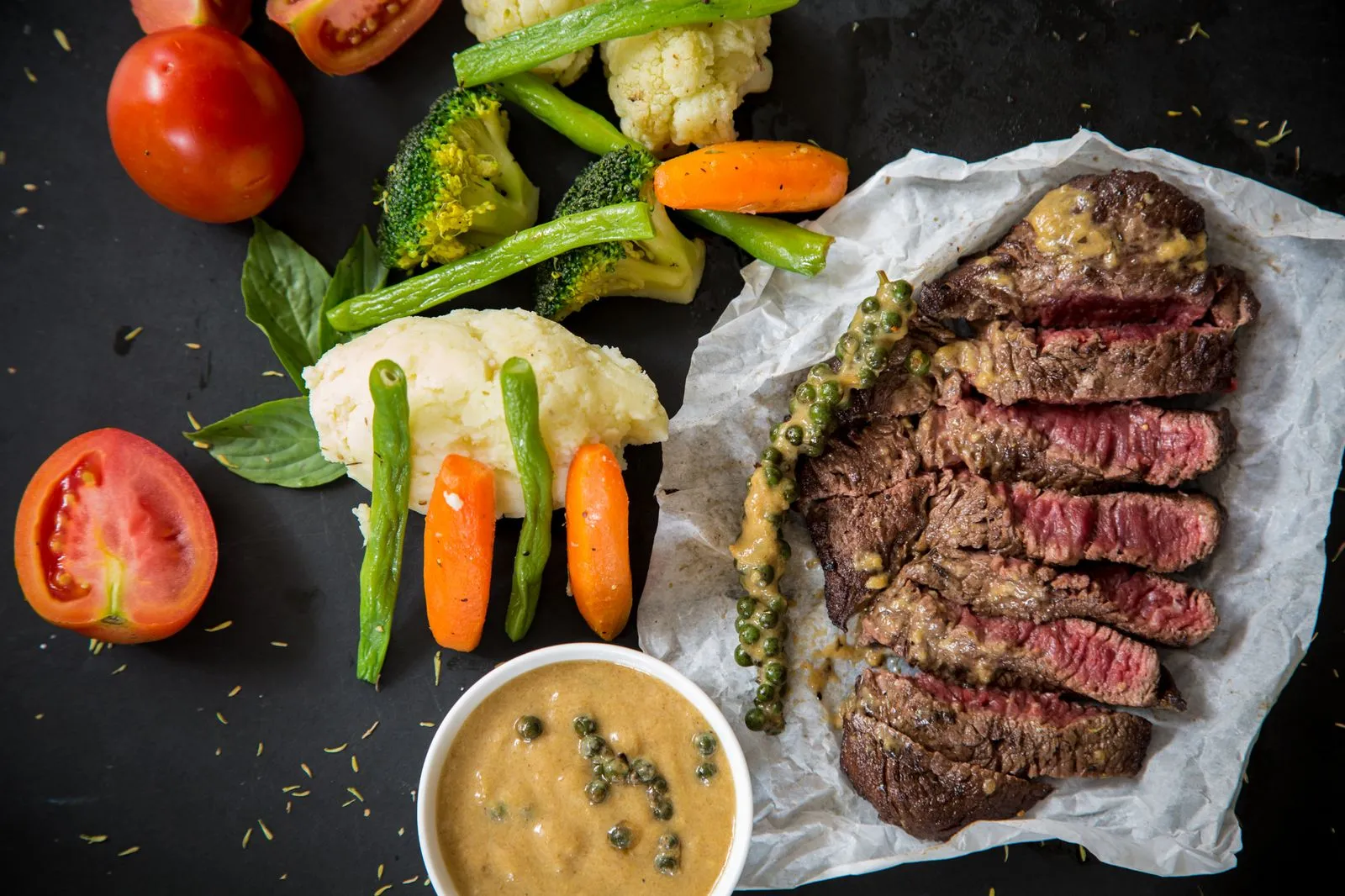
A cooked red meat dishNon-Veg Food

Is red meat okay to eat regularly, or should I limit it?

Unprocessed red meat is fine in moderation. The World Cancer Research Fund suggests keeping it to roughly 350 to 500 grams of cooked weight a week, which is three modest portions. Processed meat is the one to treat differently: the WHO advises there is no known safe level, so eat little if any.

10 min read
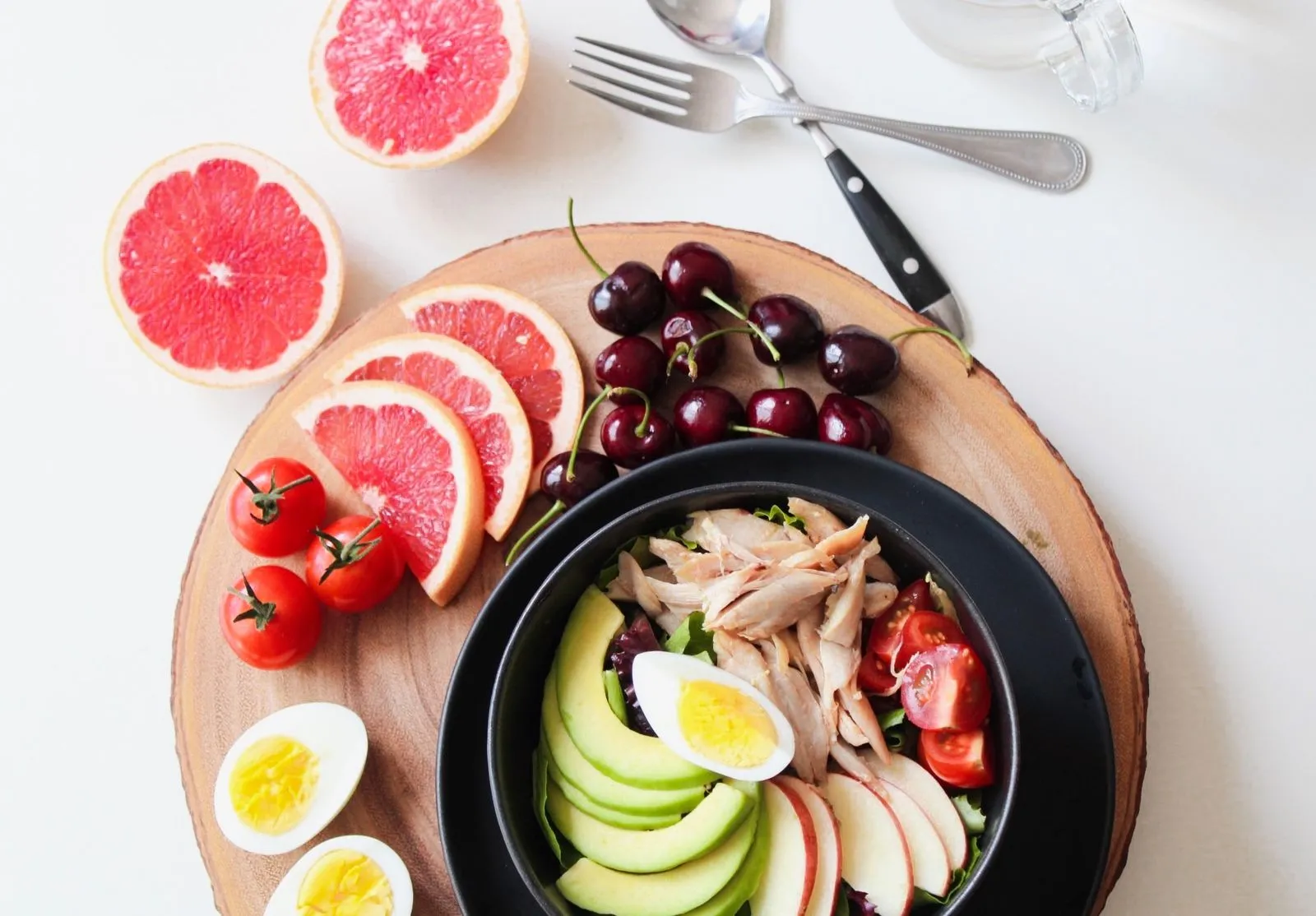
A balanced lunch plate with grilled chicken and vegetablesNon-Veg Food

What should I eat to avoid the 3pm energy crash?

Eat a moderate lunch built on protein, fibre and fat rather than a large one built on refined carbohydrate, which flattens the blood sugar dip that research links to afternoon hunger and low energy. Then accept that part of the dip is circadian and happens regardless, and handle that half with light, movement and better-timed caffeine.

11 min read

Mindfulness

Calm your mind between the meetings.

More
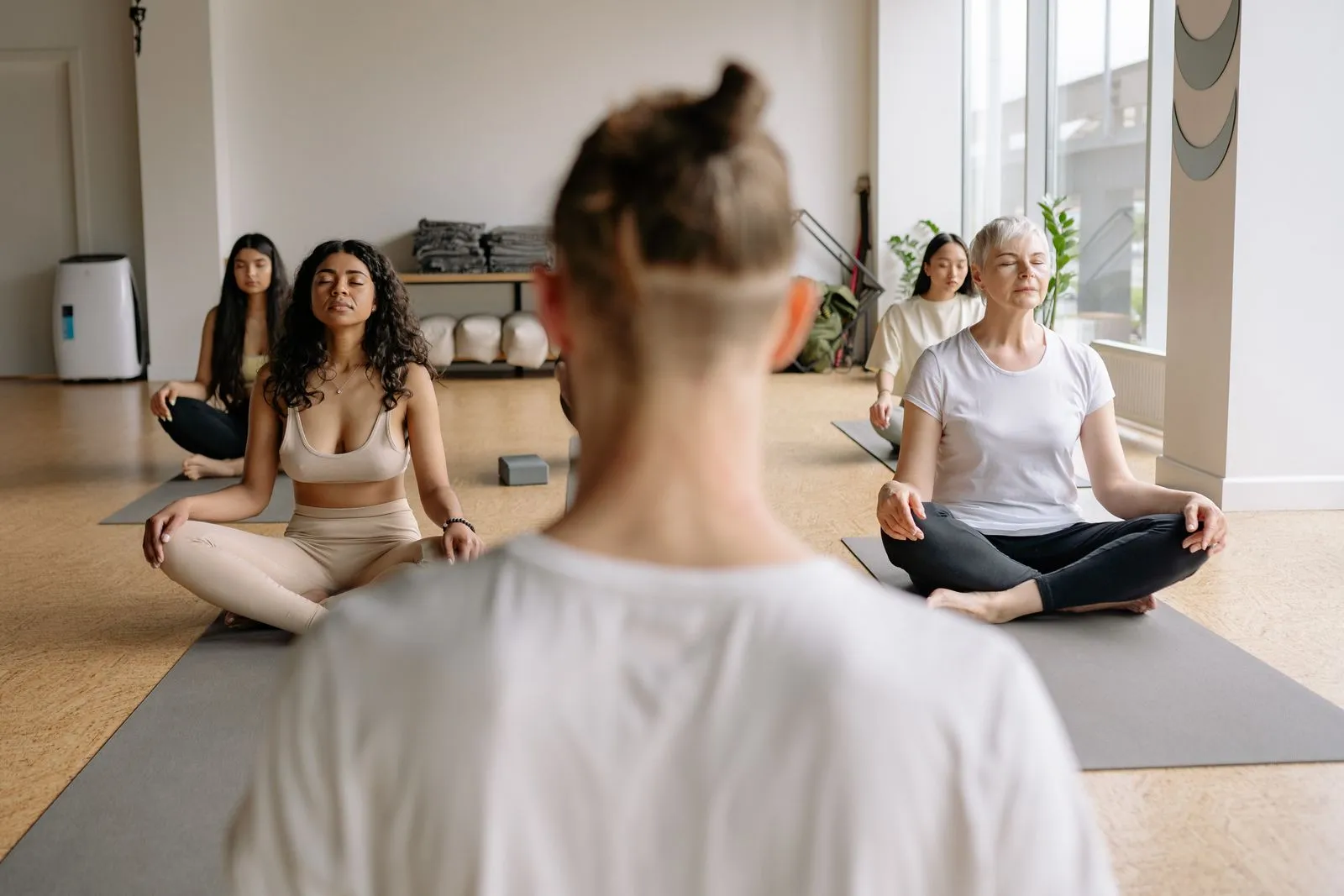
A person pausing to breathe calmly at a deskMindfulness

What's a 2-minute breathing exercise I can do between meetings?

Cyclic sighing: a normal inhale through the nose, a second short sip of air on top, then a long slow exhale through the mouth. Repeat for two minutes. In a Stanford randomised trial, five minutes a day of this improved mood and lowered breathing rate more than mindfulness meditation did.

11 min read
A notebook and pen on a calm deskMindfulness

How do I stop my mind racing after a stressful call?

Name the feeling in one word, write for three minutes without editing, then do something physical for five. Labelling an emotion reduces activity in the brain region driving it, writing gives the loop somewhere to go, and movement changes the state the replay is running in. Together they take under ten minutes.

12 min read
A calm, uncluttered desk with morning lightMindfulness

Can mindfulness improve focus at work, or is it overhyped?

Both. The evidence for modest improvements in anxiety, depression and stress is reasonable; the evidence for many of the bolder claims is thin, and a group of leading meditation researchers said so in print in 2018. For attention specifically the case is better than average, and it needs about twelve minutes a day.

11 min read

Tools to Keep You Organised

Small systems that make good habits easy.

More
A tidy desk with a water bottle, notebook and resistance bandTools to Keep You Organised

What small tools help you build better desk habits?

Six cheap physical things, chosen because they remove friction rather than add motivation: a big water bottle, a resistance band, a laptop riser with a separate keyboard, a break reminder, a paper notebook, and a divided lunch box. Total cost is under a week of bought lunches, and each one makes a specific habit from this site easier to do than to skip.

11 min read
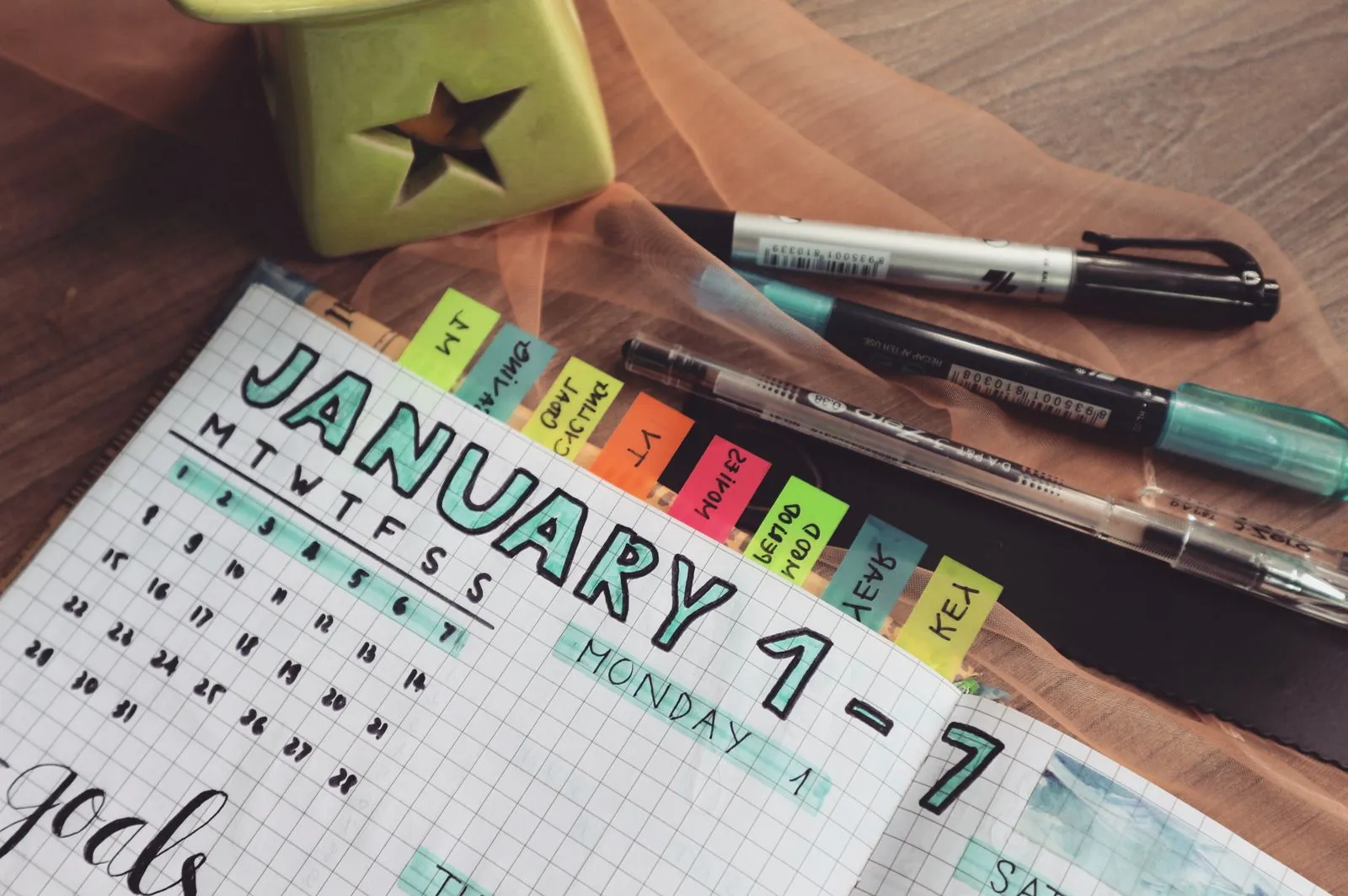
A paper wall calendar with days marked offTools to Keep You Organised

Do habit trackers work?

Yes, modestly, and the way you track matters. A meta-analysis of 138 studies covering nearly 20,000 people found that monitoring progress toward a goal improved the chance of reaching it, with larger effects when the record was physical and when the results were reported to someone. The catch is that tracking is a scaffold, not the habit.

11 min read
A person writing a plan in a notebookTools to Keep You Organised

How do I build a habit that sticks?

Attach a very small behaviour to something you already do, write down exactly when and where it will happen, and expect it to take about two months rather than three weeks. In a UCL study, habits took a median of 66 days to become automatic, with a range from 18 to 254. Missing one day did not derail it.

11 min read

Start anywhere

Pick a topic, read the chapters in order, keep what actually works for you.